One platform handles everything.
Store, curate, annotate, train, and validate pathology models in one secure environment — with role-based access, full audit trails, and research-only deployment. Final interpretation always stays under specialist review.
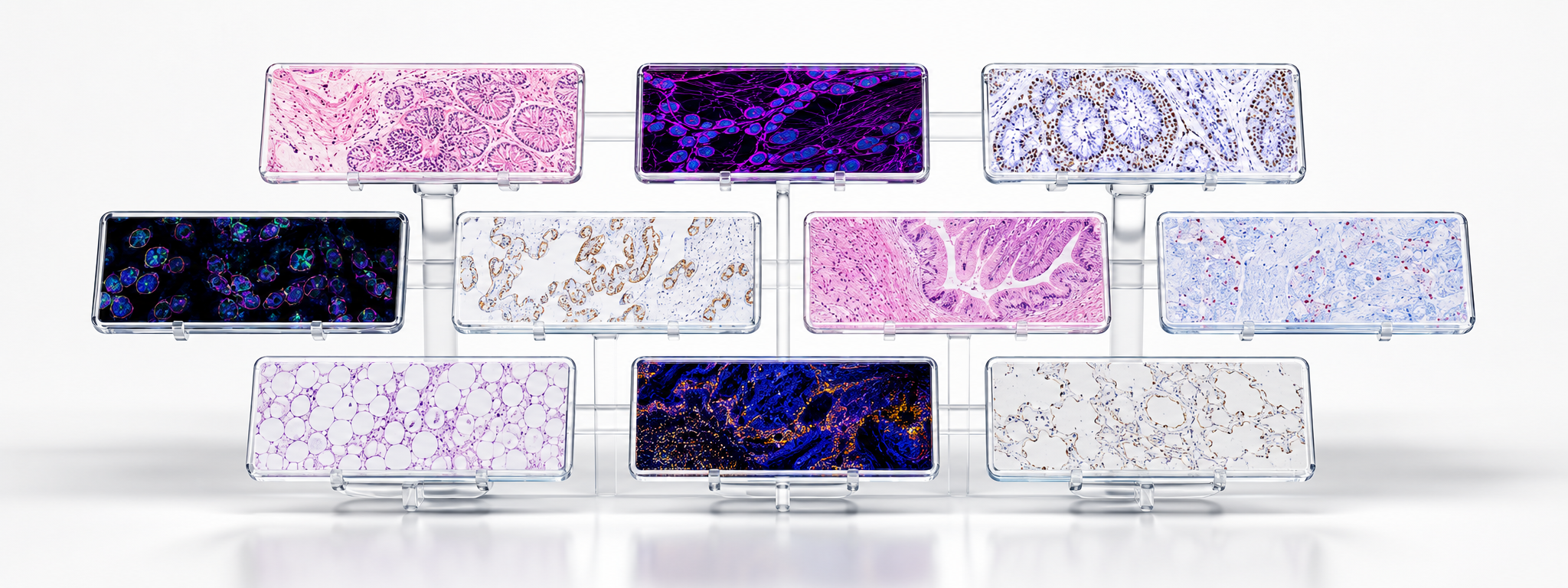
Follow a model through every stage of its development
From the first stored slide to a validated, research-ready model — each stage shares the same secure data layer, access policies, and audit trail.

Step 01 / 06
Research Platform
A secure environment for the full pathology AI development cycle. Whole-slide images, cohorts, annotations, and model outputs live in one place, with role-based access configured to match the host institution's governance.
- Secure whole-slide image storage
- Cohort and metadata management
- Multi-user role-based access
- Audit trails on every operation
Step 02 / 06
Dataset Curation
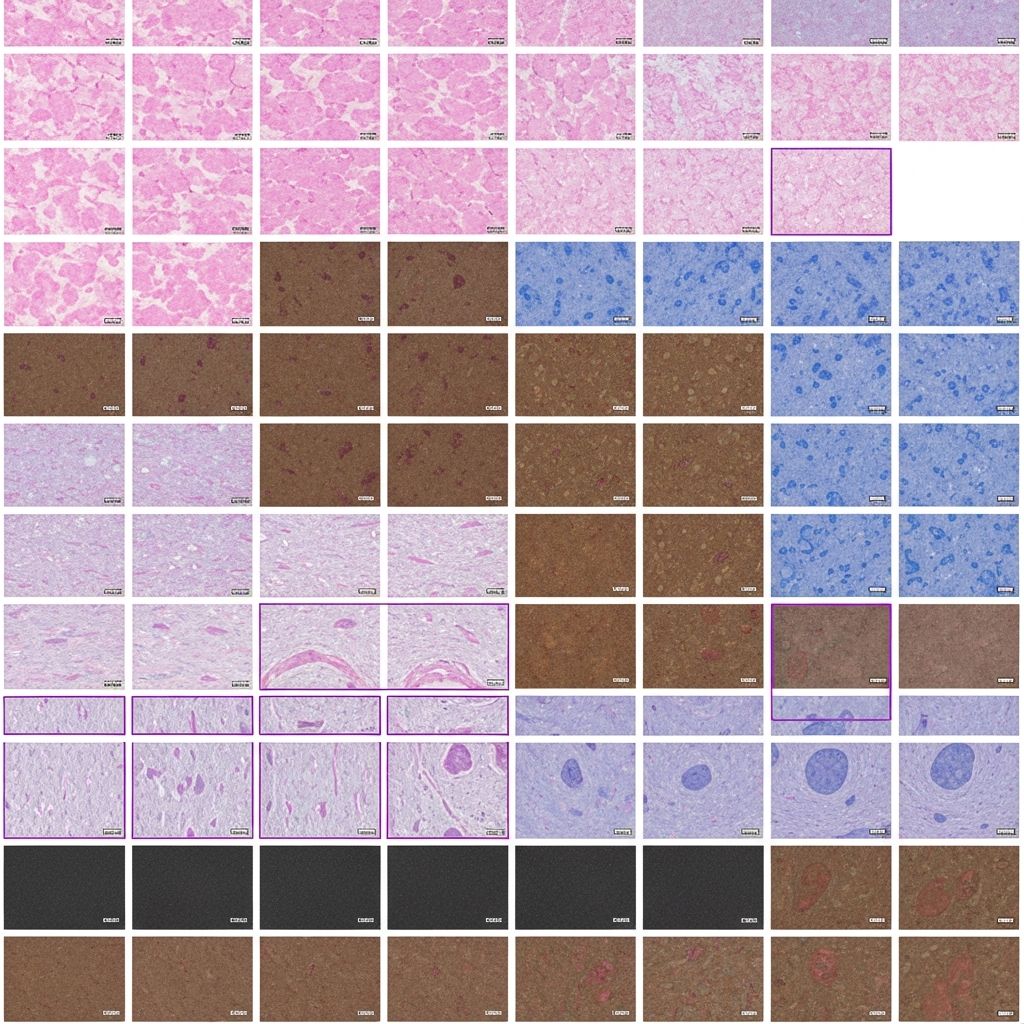
A model is only as good as the cohort it learned from. Define inclusion criteria, attach metadata, de-identify, run quality control, and export model-ready datasets that stay fully traceable across versions.
- Inclusion / exclusion criteria
- De-identification of slides + metadata
- Image-level quality control
- Versioned dataset snapshots

Step 03 / 06
Annotation Workbench
Pathology annotations drive every downstream model. Built for expert annotators: precise region tooling, structured biomarker labels, multi-reader consensus, and audit trails — so annotation quality is measured, not assumed.
- Tumor region + tissue-type tooling
- Biomarker expression labels
- Multi-reader consensus workflows
- Inter-rater agreement reporting

Step 04 / 06
Model Training
Curated data, expert annotations, and a reliable training pipeline in one place, so research teams iterate on pathology-grade models without rebuilding the supporting infrastructure each time.
- Configurable training experiments
- Versioned datasets + model artifacts
- Review against held-out cohorts
- Research-only deployment paths

Step 05 / 06
Validation & Review
Before a model moves toward routine use, performance is reviewed against expert annotations on representative cases — with structured comparison views, agreement metrics, and report templates for local validation studies.
- AI vs. expert side-by-side review
- Quantitative agreement metrics
- Cohort-level performance dashboards
- Exportable validation reports

Step 06 / 06
Developer SDK
Research groups bring their own models and tools. Documented APIs let custom models, viewers, and downstream systems plug into the same governed data and workflows our own modules use — without a separate security model.
- APIs for image + metadata access
- Hooks for custom model integration
- Sandboxed execution environments
- Versioned, auditable deployments
Integrate your own tooling without leaving the platform
Documented APIs and integration hooks let engineering teams connect custom models, viewers, and downstream systems to the same governed data layer.
1M+ expert annotations. (Four years of research. Two years of clinical practice.)
One platform for the whole cycle
Every stage. One governed research platform.
From whole-slide image storage and cohort curation to expert annotation, dataset preparation, model training, and research-only deployment — every tool shares the same secure data layer, access policies, and audit trail. One environment powers the entire pathology AI development cycle.
Speak with our pathology team
Tell us about your laboratory, the case mix you work with, and the workflow you want to evolve. We will tailor the demonstration and validation plan to match your exact protocols, scanners, and reporting habits.