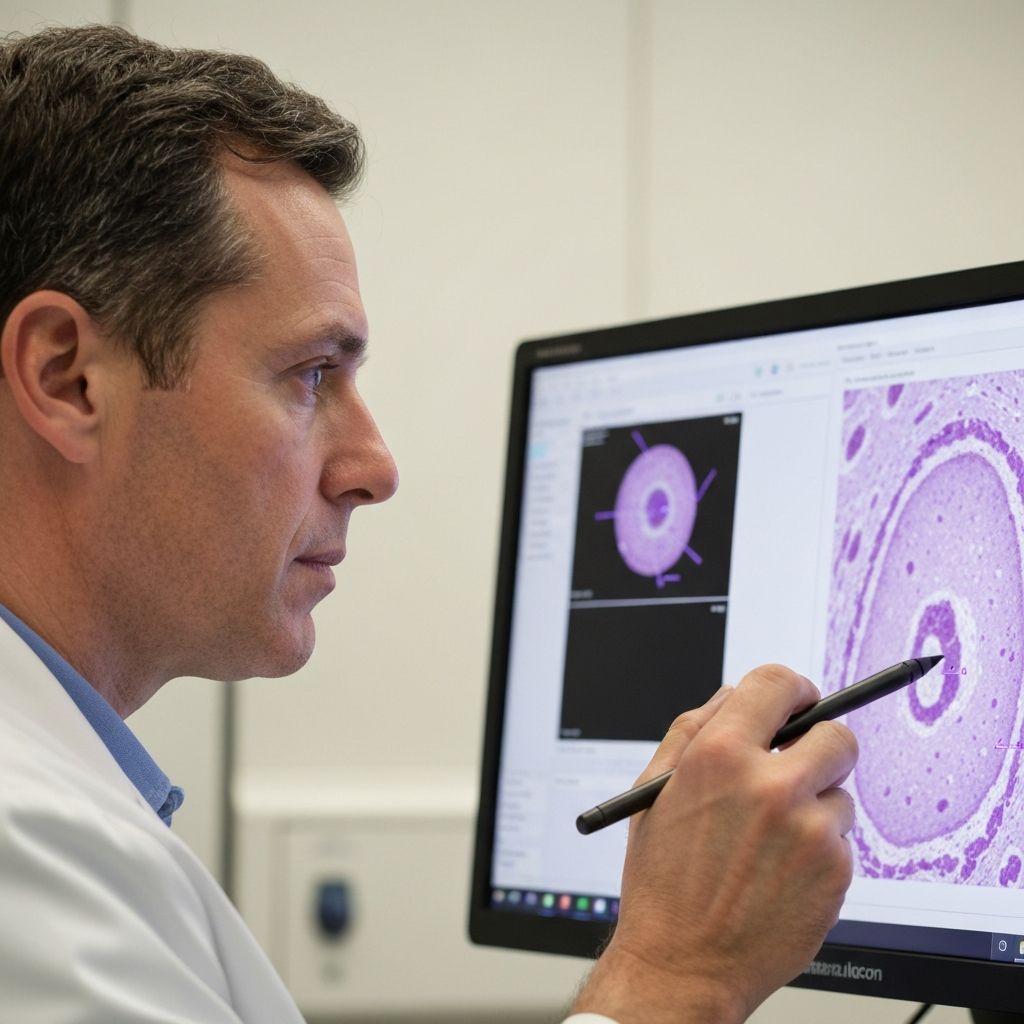
Human oversight is not achieved simply by placing a person somewhere in an AI workflow. It depends on whether the person has the information, time, authority, and training needed to understand an output and act on it. In pathology, the design question is how AI assistance supports review without obscuring uncertainty or transferring responsibility to an opaque system.
Define the human role before the interface
The workflow should state what the AI receives, what it produces, who reviews it, which decision it may inform, and what remains outside its scope. A reviewer may verify a region, assess a suggested measurement, compare an output with the original slide, or decide that the input is unsuitable. These are different activities and should not be collapsed into a generic approval step.
Make outputs inspectable
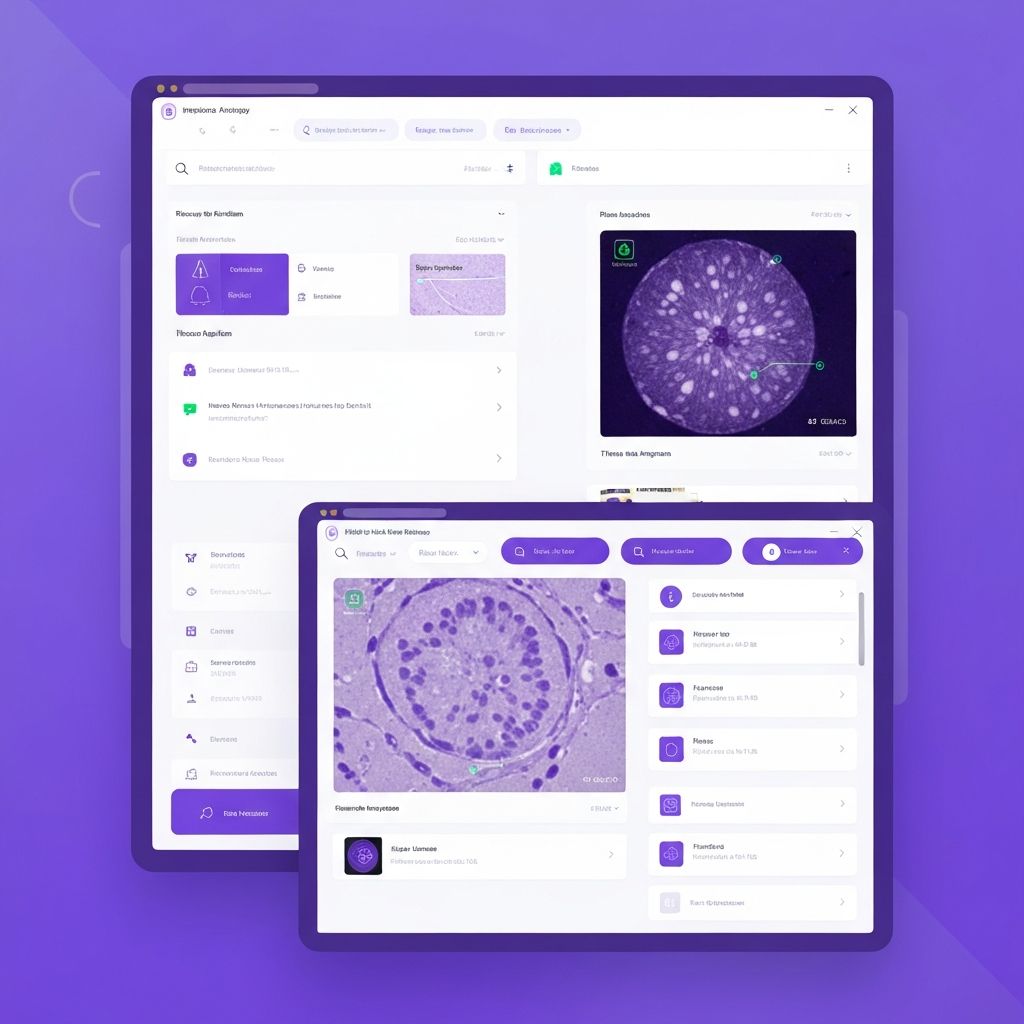
- Show the source image and the relevant AI output together so the reviewer can orient to the same case.
- Distinguish observations, measurements, classifications, and recommendations.
- Expose input-quality checks, known limitations, uncertainty, and out-of-scope conditions when they affect interpretation.
- Record the model version, input context, review action, and any correction or override needed for later analysis.
Visual explanation is not the same as a proof of correctness. An overlay can show where a model responded, but it may not explain why the response is clinically appropriate. Reviewers need enough context to question an output rather than merely accept a plausible-looking visualization.
Design review points that can actually work
A review point should occur where the output can still change the next action. It should make disagreement possible, avoid default acceptance, and provide a clear path when the input is poor or the result is outside the intended scope. The amount of information and time required should be tested with representative users and realistic cases, not assumed from a feature list.
Evaluation can include agreement and disagreement patterns, review time, missed errors, unnecessary overrides, reasons for rejection, and whether users can identify known limitations. These observations do not replace technical performance measures. They add evidence about how the system behaves in the context where decisions are made.
Oversight also continues after release. Model updates, new input conditions, workflow changes, and incidents can alter the meaning of an output. Clear ownership for monitoring, issue review, communication, and rollback helps keep human judgment active throughout the system lifecycle rather than treating it as a checkbox at launch.
Sources
- Transparency for Machine Learning-Enabled Medical Devices: Guiding Principles (U.S. Food and Drug Administration)
- Ethics and governance of artificial intelligence for health (World Health Organization)
- Artificial Intelligence Risk Management Framework AI RMF 1.0 (National Institute of Standards and Technology)
Written by
Digital Pathology Solutions Editorial Team
Medical AI and digital pathology