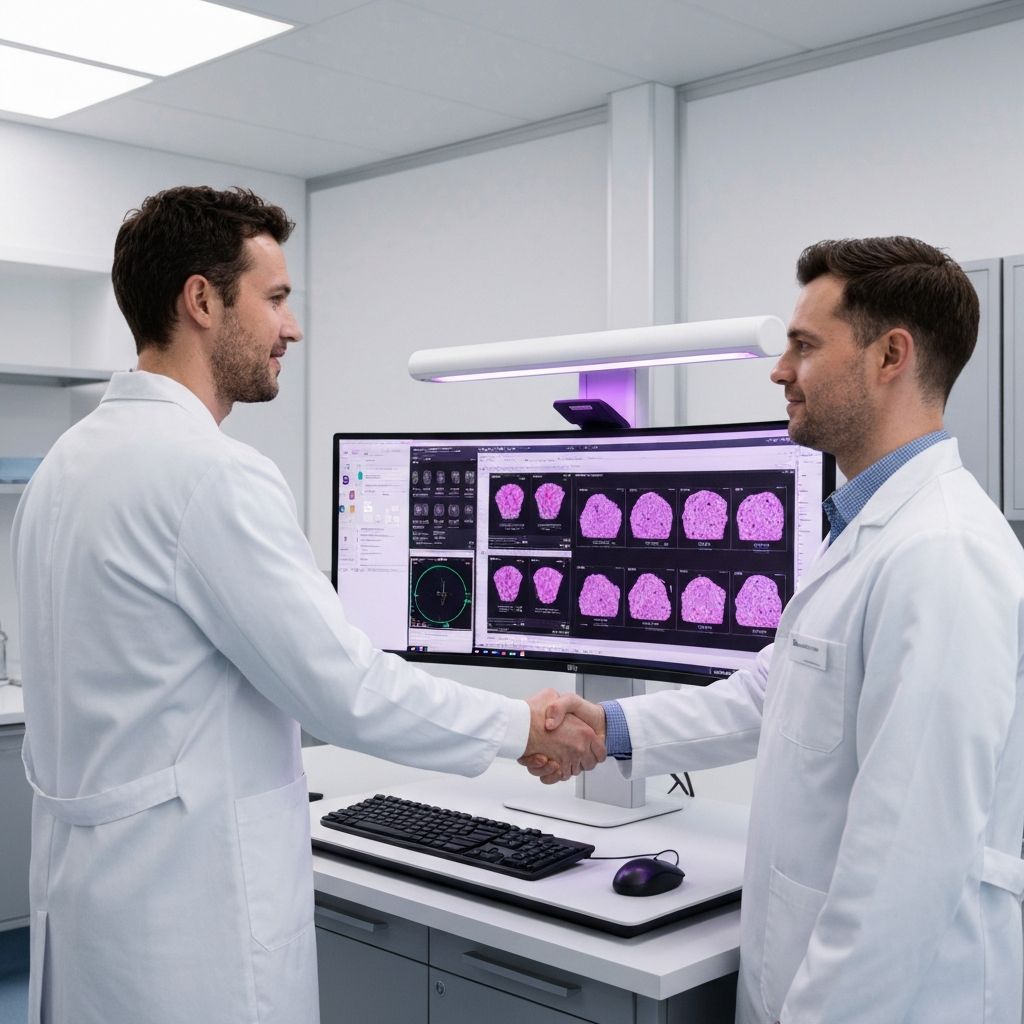
A multi-laboratory digital pathology rollout is an organizational change as well as a technology project. The work includes clinical governance, specimen and image workflows, infrastructure, cybersecurity, quality processes, training, support, and a plan for what happens when a system is unavailable or outside its intended scope.
Choose a bounded first workflow
Begin with a defined use case, population, specimen type, output, and user group. Decide whether the first phase is research, quality improvement, operational support, measurement, or clinical decision support. Do not use a broad promise of AI transformation as a substitute for an approved intended-use statement and a documented risk assessment.
Map local readiness
For each laboratory, document scanners, image formats, storage, network capacity, identity management, laboratory information systems, reporting, backup, access control, and support ownership. Include staining and specimen variation, local policies, staffing, and the process for resolving mismatched or unusable images.
Set governance before deployment
Name the clinical owner, technical owner, quality owner, privacy contact, and escalation path. Define who can approve a workflow, who reviews incidents, who can change configuration, and who communicates limitations to users. Governance should include a process for feedback and redress when an AI-supported decision may have caused harm.
Plan change and retirement
Before expansion, define version control, revalidation triggers, rollback, outage procedures, data retention, vendor access, and retirement. Changes to scanners, staining, interfaces, model versions, or intended users can alter risk. Keep a record of what was evaluated at each site and review performance throughout the lifecycle.
A responsible rollout is incremental and reversible. It establishes a bounded decision-support workflow, gives local professionals the information and authority to question outputs, and uses evidence from real operations to decide whether the next laboratory or use case is ready.
Sources
- Good Machine Learning Practice for Medical Device Development: Guiding Principles (U.S. Food and Drug Administration)
- Artificial Intelligence Risk Management Framework (National Institute of Standards and Technology)
- Ethics and governance of artificial intelligence for health (World Health Organization)
Written by
Digital Pathology Solutions Editorial Team
Medical AI and digital pathology